Most of us are familiar with sets of directions which come with most products we purchase. As children many learned to put together model airplanes or cars with directions. We received games to play that came with directions and when followed, countless hours were spent playing those games.
WHAT DO YOU DO WHEN THERE IS NO SET OF DIRECTIONS?
One of the things missing with aphasia therapy is the actual set of directions. Have you ever received a product and the instructions were not in the box?
HOW CAN YOU EXPECT SUCCESS WITHOUT A SET OF DIRECTIONS?
I'm sure that it has happened to you, It's frustrating to receive a model, piece of furniture or an appliance without directions. Many unfortunate things happen when there are no directions. (Just think of what could happen if you are in a life or death situation and you have never learned CPR?) All of us need to know the set of directions of what to do in the event of drowning, heart attack, stroke, shock, injury, etc.. It's no different for what to do to help people
with aphasia talk. The trouble is we are not given the tools in order to deal with these very human experiences.)
MANY THERAPISTS, CAREGIVERS AND FAMILY MEMBERS NEVER GIVEN THE DIRECTIONS
An observation made from over 45 years of doing speech therapy with aphasia was there were very few opportunities to receive training in actual methods to help people talk! Sure there were worksheets, and complicated programs that required one to collect data on standardized forms using programs that the scientific - educational communities loved, but therapists intensely disliked. Why? They were impractical, impersonal, and did little to form a friendship or relationship
between therapist and client.
YOU CAN OBTAIN WRITTEN, AUDIO AND VIDEO DIRECTIONS TO HELP PEOPLE WITH APHASIA TALK
The Teaching of Talking Method is a set of instructions which anyone can learn. The method helps therapists and caregivers learn how to help those with aphasia talk! Similar to how to put a piece of furniture together, or how to get from point A to point B on a road map.
THE PHRASE "KEEP TRYING," OR "IT'LL GET BETTER" JUST DOESN'T WORK TO IMPROVE TALKING
Instead of saying "keep trying" or "it'll get better," look for a method that is tried and true and used by the author for decades to help people with aphasia talk better or again.
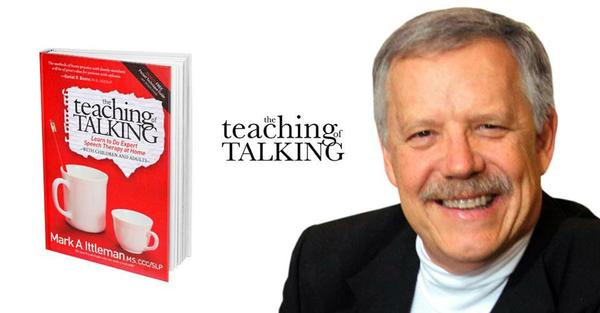
Moshe Mark Ittleman, M.S., CCC/SLP Senior Speech Language Pathologist, author and developer of the Teaching of Talking Method. Over 45 years of helping people with aphasia talk better or again,
Thanks for being a loyal email subscriber. We appreciate hearing from you. Let us know if you ever have any questions.